
4.4 4.0M
Related games




Featured games
View all →



Orbit Beats - One-Button Rhythm Game
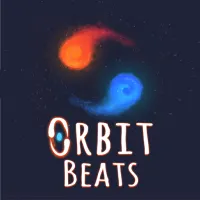
Orbit Beats is a challenging one-button rhythm game where you guide two orbiting planets—Fire and Ice—along winding paths by tapping or clicking in perfect sync with the music. Originally released by 7th Beat Games in 2014, this minimalist rhythm title requires intense focus, precise timing, and a strong sense of musical rhythm to survive increasingly complex levels.
Core Gameplay Mechanics
The entire game is controlled with a single input: tap or click (spacebar or mouse) at the exact moment the rhythm demands it. Each tap makes both planets step forward one tile along their interconnected path. The planets orbit each other while moving, and when you tap at the correct beat, they swap positions to maintain balance and stay aligned with the winding track. Missing a beat or tapping off-rhythm causes both planets to lose balance and fall off the track, ending your run instantly and forcing you to restart from the beginning or last checkpoint.
One-Button Control
The entire game revolves around a single action: tapping or clicking at the exact moment the rhythm demands it. This simple control scheme makes the game instantly accessible while maintaining incredible depth.
Orbital Movement System
Each tap makes both planets step forward one tile along their interconnected path. The planets orbit each other while moving, and when you tap at the correct beat, they swap positions to maintain balance and stay aligned with the winding track.
Instant Failure Mechanics
Missing a beat or tapping off-rhythm causes both planets to lose balance and fall off the track, ending your run instantly and forcing you to restart from the beginning or last checkpoint. This creates intense pressure and makes every tap critical.
Path Complexity and Challenge Progression
The paths you navigate are far from straight—they twist, turn, spiral, zigzag, and form complex geometric shapes that constantly challenge your timing and precision. Straight segments require steady, even taps at a consistent tempo, while sharp corners and sudden angular shifts demand rhythm changes that test your ability to adapt on the fly. As you advance through different worlds, the beat patterns become faster, the orbits grow more unpredictable, and the routes include tighter curves and more abrupt directional changes.
Complex Geometric Paths
The paths twist, turn, spiral, zigzag, and form complex geometric shapes that constantly challenge your timing and precision. Each path design requires different rhythm strategies.
Progressive Difficulty
As you advance through different worlds, the beat patterns become faster, the orbits grow more unpredictable, and the routes include tighter curves and more abrupt directional changes. The difficulty scales smoothly but relentlessly.
Adaptive Rhythm Requirements
Straight segments require steady, even taps at a consistent tempo, while sharp corners and sudden angular shifts demand rhythm changes that test your ability to adapt on the fly.
Multiple Worlds with Unique Rhythms
Orbit Beats features multiple distinct worlds, each with its own unique tempo, beat speed, rhythm pattern, and visual style. Some levels maintain a steady 4/4 rhythm that rewards consistent tapping, while others introduce irregular time signatures or syncopated beats that require you to memorize each world’s specific rhythm structure. Only by completing an orbit perfectly can you unlock the next song and challenge, creating a progression system that rewards mastery rather than luck.
Unique Tempo and Patterns
Each world has its own unique tempo, beat speed, rhythm pattern, and visual style. This variety keeps the game fresh and requires players to adapt their timing strategies.
Varied Time Signatures
Some levels maintain a steady 4/4 rhythm that rewards consistent tapping, while others introduce irregular time signatures or syncopated beats that require you to memorize each world’s specific rhythm structure.
Mastery-Based Progression
Only by completing an orbit perfectly can you unlock the next song and challenge, creating a progression system that rewards mastery rather than luck. This ensures players truly understand each level before advancing.
The Critical First Tap
The countdown at the start of each level sets the initial tempo, and your very first tap determines whether you begin smoothly or fail immediately. Timing that initial tap perfectly is essential—starting off-beat throws off your entire rhythm for the rest of the run and often leads to an early fall. Experienced players keep a close eye on the countdown timer and listen carefully to the intro beat to ensure their first move synchronizes perfectly with the music.
Countdown Timing
The countdown at the start of each level sets the initial tempo, and your very first tap determines whether you begin smoothly or fail immediately. This makes the opening moments critical.
Rhythm Foundation
Timing that initial tap perfectly is essential—starting off-beat throws off your entire rhythm for the rest of the run and often leads to an early fall. The first tap sets the foundation for everything that follows.
Preparation Strategy
Experienced players keep a close eye on the countdown timer and listen carefully to the intro beat to ensure their first move synchronizes perfectly with the music. Preparation is key to success.
Music-First Design Philosophy
Unlike typical rhythm games that rely heavily on visual cues, Orbit Beats prioritizes audio over visuals. The background music is the key to passing each level—you must listen to the melody and feel the rhythm with your ears rather than just watching the road ahead. The game encourages immersive listening; players who close their eyes and tap purely based on the beat often perform better than those who rely solely on visual input. This music-first approach transforms each level into a meditative flow state where rhythm, reflex, and concentration merge into a single focused experience.
Audio Over Visuals
Unlike typical rhythm games that rely heavily on visual cues, Orbit Beats prioritizes audio over visuals. The background music is the key to passing each level—you must listen to the melody and feel the rhythm with your ears.
Immersive Listening
The game encourages immersive listening; players who close their eyes and tap purely based on the beat often perform better than those who rely solely on visual input. This creates a unique gameplay experience.
Meditative Flow State
This music-first approach transforms each level into a meditative flow state where rhythm, reflex, and concentration merge into a single focused experience. The game becomes almost meditative when you’re in the zone.
Why Orbit Beats Is Brutally Addictive
Orbit Beats falls into the “easy to learn, difficult to master” category—the one-button control scheme is instantly accessible, but the precise timing and rhythm recognition required to complete levels create an extremely high skill ceiling. Just a single mistimed tap erases all progress, creating intense pressure that makes successful runs deeply satisfying. The combination of beautiful geometric visuals, hypnotic music, and unforgiving difficulty turns every completed level into a genuine achievement.
Easy to Learn, Difficult to Master
The one-button control scheme is instantly accessible, but the precise timing and rhythm recognition required to complete levels create an extremely high skill ceiling. This creates a perfect learning curve.
High Stakes Gameplay
Just a single mistimed tap erases all progress, creating intense pressure that makes successful runs deeply satisfying. The stakes are always high, making every moment count.
Satisfying Achievement
The combination of beautiful geometric visuals, hypnotic music, and unforgiving difficulty turns every completed level into a genuine achievement. Success feels earned and meaningful.
Tips for Mastering Orbit Beats
Train Your Ears, Not Just Your Eyes
Listen actively to the music and let the rhythm guide your taps—visual cues alone won’t save you in faster, more complex sections. The music is your primary guide, not the visuals.
Nail the First Tap Every Time
Practice the countdown timing repeatedly until your opening tap becomes automatic and perfectly synced. The first tap sets the tone for the entire run.
Memorize World-Specific Rhythms
Each world has a unique tempo and pattern; learning these by heart allows you to anticipate changes before they appear visually. Memorization is key to advanced play.
Adjust Timing for Curves
Straight paths need consistent rhythm, but corners and spirals often require slight timing shifts—learn to feel these changes through the music. Adaptability is crucial.
Focus on Consistency Over Speed
Steady, accurate taps beat frantic button mashing every time; slower, controlled runs survive longer than rushed attempts. Patience and precision win.
Use Checkpoints Strategically
Reaching checkpoints saves partial progress; analyze where you keep failing and practice those rhythm sections specifically. Use checkpoints as learning opportunities.
Stay Calm Under Pressure
The difficulty increases progressively, and panic leads to mistimed taps; maintaining composure and trusting your rhythm sense is crucial. Mental composure is as important as timing.
Frequently Asked Questions
Is Orbit Beats free to play?
Yes, Orbit Beats is available to play for free in web browsers. No downloads or installations are required.
Can I play on mobile devices?
Yes, the game supports mobile play with touch controls optimized for smartphones and tablets. The one-button mechanics work perfectly on touchscreens.
How do I unlock new worlds?
Unlock new worlds by completing each orbit perfectly. Only by mastering a level can you unlock the next song and challenge.
What makes Orbit Beats different from other rhythm games?
Orbit Beats stands out with its music-first design philosophy, one-button control scheme, orbital movement mechanics, and unforgiving difficulty that rewards mastery over luck.
How important is the first tap?
The first tap is critical—starting off-beat throws off your entire rhythm for the rest of the run. Practice the countdown timing to ensure a perfect start.
Should I focus on visuals or audio?
Focus primarily on audio. The game prioritizes music over visuals, and players who listen carefully to the rhythm often perform better than those relying solely on visual cues.
Are there different difficulty levels?
The game features progressive difficulty through multiple worlds, each with unique tempos, beat speeds, and rhythm patterns that gradually increase in challenge.
What happens if I miss a beat?
Missing a beat causes both planets to lose balance and fall off the track, ending your run instantly. You’ll need to restart from the beginning or last checkpoint.